What to buy
Fireclay Farmhouse Sinks: The Look, the Weight, and Which to Buy
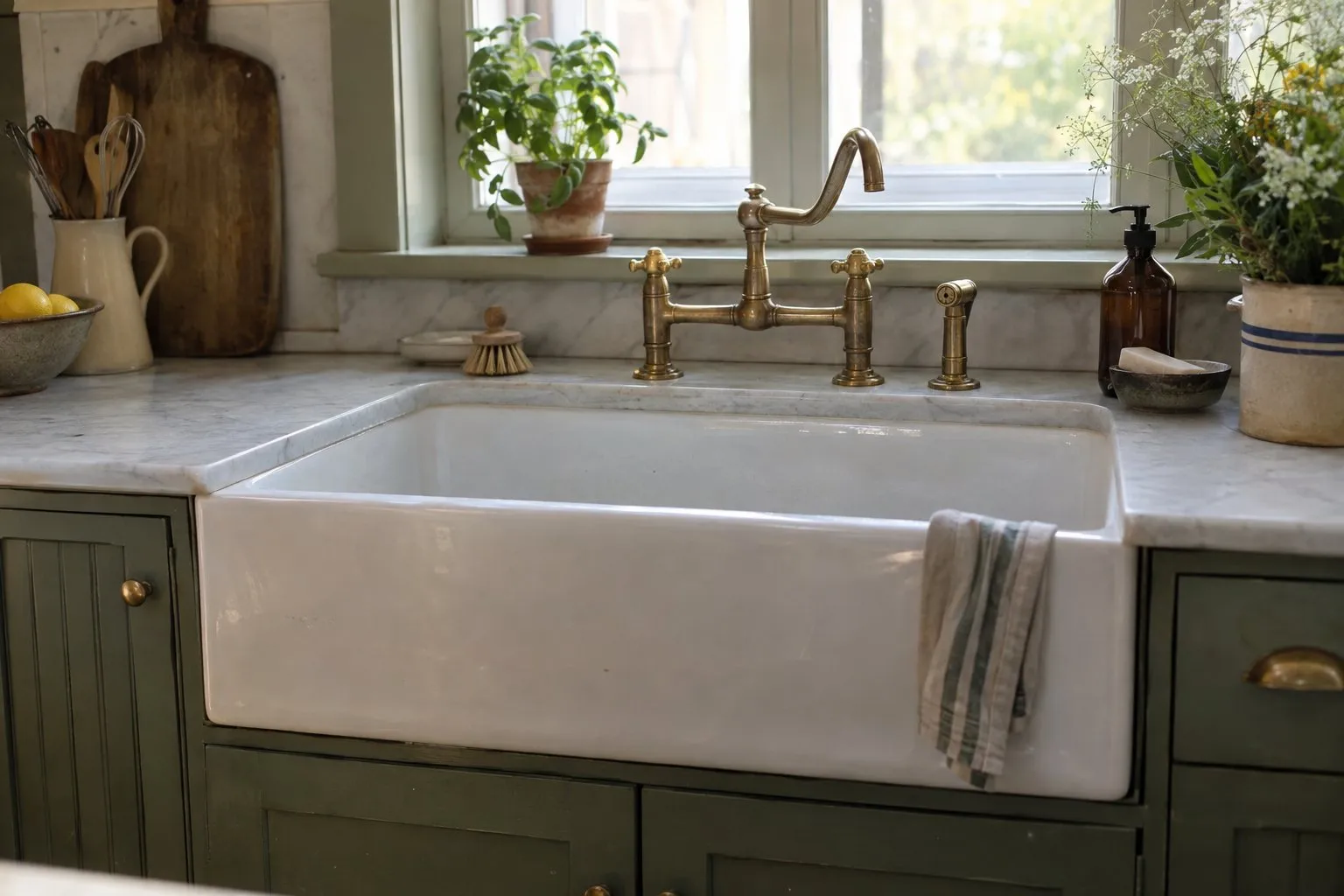
Fireclay is the classic white farmhouse sink: clay fired hard, thick and heavy. Take the Ruvati RVL2300WH for a 36-inch base and the BOCCHI Classico 30 for a 33-inch base. Either one needs real support inside the cabinet.
Disclosure: This page contains affiliate links (marked with *). If you buy through them, we earn a small commission at no extra cost to you. As an Amazon Associate I earn from qualifying purchases. Learn more
In short
A fireclay farmhouse sink is an apron-front sink made of clay fired above 2,000 degrees F. Our pick is the Ruvati RVL2300WH, with a reversible flat or fluted front, for a 36-inch base. The BOCCHI Classico 30 fits a 33-inch base. Plan for weight: the BOCCHI listing gives 76.81 pounds. Don't use steel wool or scouring powder on it.
On this page
Ruvati
Ruvati RVL2300WH
A 33-inch white fireclay sink you can install flat side or fluted side out.
Why here: True fireclay with a front you can choose, and Ruvati publishes the cabinet and flange details you'd otherwise find out too late.
Best for: A classic white apron sink in a true 36-inch farmhouse base.
- Reversible front: flat or fluted
- True fireclay, 1 inch thick
- Bottom rinse grid and drain included
- Needs a 36-inch base, with no adjusting room in a 33
- The 1-inch-thick bottom may need an extended disposal flange
- Premium price class
- Mounting
- Apron-front
- Minimum cabinet
- 36 in
- Outside size
- 32-3/4 × 20-1/4 × 10-1/4 in
- Bowl
- 30-3/4 × 18-1/4 in, single
- Bowl depth
- 8-3/4 in
- Material
- Fireclay, 1 in thick
- In the box
- Rinse grid, drain assembly, install guide
- Price class
- Premium
What you're buying
Fireclay is clay fired at high heat. Ruvati says its RVL2300WH is 1 inch thick, fired at 2900 degrees F and made in Italy. That thickness is why it looks the way it does and also why it weighs what it does. Steel is the other route, and fireclay vs stainless steel compares them on weight, care and what can go wrong.
Which one for your cabinet?
Which one?
If you have a 36-inch base and want to choose the front → Ruvati RVL2300WH
View(paid link to Amazon, opens in a new tab)Ad · paid link · check price & delivery on AmazonIf you only have a 33-inch base → BOCCHI Classico 30
View(paid link to Amazon, opens in a new tab)Ad · paid link · check price & delivery on AmazonIf you want enameled cast iron instead → Kohler Whitehaven
View(paid link to Amazon, opens in a new tab)Ad · paid link · check price & delivery on Amazon
| Comparison | Our pick: fireclay farmhouseRuvati RVL2300WH | BOCCHI Classico 30 | Kohler Whitehaven |
|---|---|---|---|
| Mounting | Apron-front | Apron-front | Undermount apron-front |
| Minimum cabinet | 36 in | 33 in | 36 in apron base |
| Outside size | 32-3/4 × 20-1/4 × 10-1/4 in | 30 × 18 × 10 in | 35-3/4 in nominal |
| Bowl | 30-3/4 × 18-1/4 in, single | Single | 30-3/4 × 18-1/16 in, single |
| Bowl depth | 8-3/4 in | – | 9 in |
| Material | Fireclay, 1 in thick | Fireclay | Enameled cast iron |
| In the box | Rinse grid, drain assembly, install guide | Bottom grid, chrome basket strainer | – |
| Price class | Premium | Mid-range | Premium |
| Best for | A classic white apron sink in a true 36-inch farmhouse base. | A farmhouse look in a kitchen without room for a 36-inch base. | A premium kitchen build with a 36-inch apron base already planned. |
| On Amazon(paid link to Amazon, opens in a new tab)Ad · paid link · check price & delivery on Amazon | On Amazon(paid link to Amazon, opens in a new tab)Ad · paid link · check price & delivery on Amazon | On Amazon(paid link to Amazon, opens in a new tab)Ad · paid link · check price & delivery on Amazon |
Ruvati RVL2300WH
It's 32-3/4 inches wide with a bowl 8-3/4 inches deep. One side of the front is flat and the other fluted, so you choose when you install. It comes with a rinse grid and a drain assembly.
Buy it if you have a true 36-inch base. Ruvati says 36 inches is the minimum, and that a 33 leaves no room to adjust the sink. Skip it if you plan a disposal and don't want to check the fittings: the 1-inch-thick bottom may need an extended flange. See farmhouse sinks and disposals.
BOCCHI Classico 30
A 30-inch sink, 18 inches front to back and 10 inches tall, for a 33-inch base. The retailer listing gives 76.81 pounds and says it comes with a chrome basket strainer and a bottom grid. It's reversible and finished on all four sides.
Buy it if space is short. Skip it if you want the bigger bowl, or a maker's own spec sheet: our figures come from a retailer's listing, and that listing isn't consistent on drain placement, so confirm it first.
Kohler Whitehaven
This one is enameled cast iron and not fireclay. Kohler sells it for a 36-inch apron base with a bowl that slopes toward an offset drain. It belongs on the same shortlist, because you'd be buying it for the same reasons. More on our Kohler page.
Plan for the weight
Signature Hardware says a farmhouse sink needs a custom cabinet or custom support, and that it rests fully on that support. How heavy is a farmhouse sink has the figures we could find, and the install overview shows where the supports go.
Care in brief
KRAUS's advice for fireclay differs from its advice for steel. Rinse and wipe after use, and use dish soap or a half-and-half mix of white vinegar and water. Don't leave coffee grounds or tea bags sitting, and don't use steel wool or scouring powder. Don't set hot pans straight into the bowl either; use a trivet or a rolling mat.
Fireclay, porcelain or cast iron?
These get mixed up in listings. Signature Hardware says fireclay is fired above 2,000 degrees F, and that porcelain sinks are fired at about 1,200 to 1,400 degrees F and usually have a steel or cast iron shell under the enamel. Kohler's Whitehaven is enameled cast iron. They can all look like a white apron sink from across the room, so check the material line on the listing and not the photo.
Things to settle before you order
- The front. Flat or fluted? The Ruvati and BOCCHI are both reversible, so you can decide at installation.
- The faucet. Signature Hardware says most farmhouse sinks have no faucet holes, so it goes on the counter or the wall.
- The drain. Ruvati gives a 3.5-inch opening. The BOCCHI listing contradicts itself on drain placement, describing a drain to the left or right but listing it as center in the details table. Ask before you buy.
- The accessories. The BOCCHI includes a strainer and a bottom grid, and its colander and drain cover are sold separately. Ruvati includes a grid and a drain assembly. The Kohler's drain is sold separately.
- The real size. BOCCHI's listing warns that dimensions may vary because of firing. Have the sink on site before the counter is cut, so the fabricator measures the real thing.
Final call
Have the cabinet size settled first. If you have the 36-inch base, the Ruvati RVL2300WH* is our pick. If your cabinet can't be changed at all, read can it go in your existing cabinet before you buy anything.
Asked before buying
Is a fireclay sink better than porcelain?
They're made differently. Signature Hardware says fireclay is fired above 2,000 degrees F, while porcelain sinks are fired at about 1,200 to 1,400 degrees F and usually have a steel or cast iron shell inside the enamel. It describes fireclay as very durable. Compare the exact sinks, though, since finish and thickness vary.
How do you clean a fireclay sink?
KRAUS says to rinse and wipe it with a microfiber cloth after use, and to use mild dish soap or a half-and-half mix of white vinegar and water for deeper cleaning. Baking soda and a soft sponge work on stuck-on food. Skip steel wool, wire brushes and scouring powders.
Can you put hot pans in a fireclay sink?
KRAUS says not to put hot items from the stove or oven directly into the sink, and to use a trivet or rolling mat instead. It also warns against leaving coffee grounds, tea bags or other staining things on the surface for long.
Do fireclay sinks vary in size?
They can. The BOCCHI listing warns that dimensions may vary because of the firing process, and Ruvati gives its sizes as nominal figures. Have the actual sink on site before the counter is cut, so the fabricator can measure the real thing.
Where this comes from
Read next
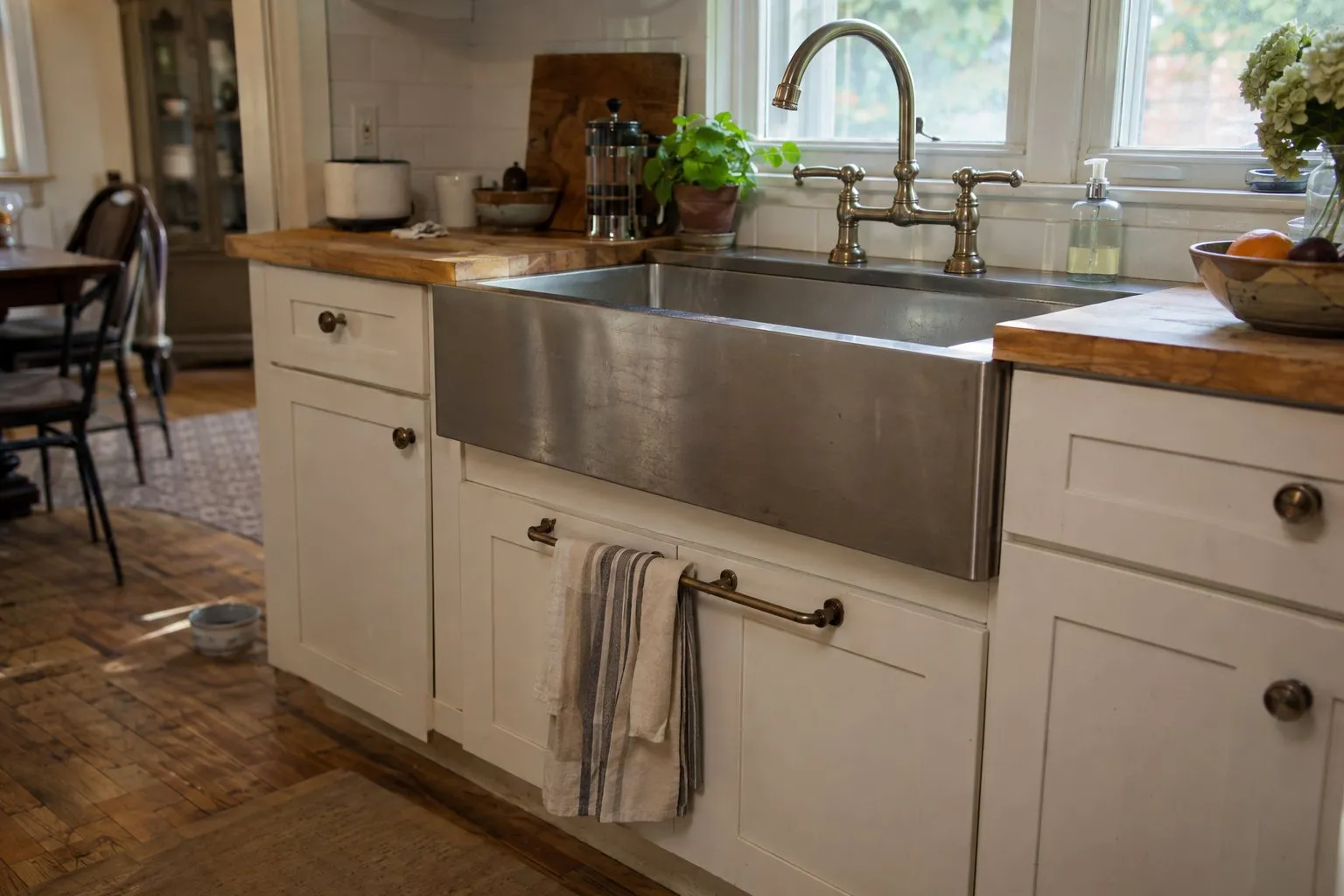 What to buyFarmhouseStainless steel farmhouse sinks: the apron look without a glaze to chip, what they need from your cabinet, and how they compare to fireclay and cast iron.
- ComparisonFireclay or steelFireclay vs stainless steel sinks: compare weight, care, what can go wrong and the look, with facts from KRAUS, Ruvati and Signature Hardware.
- Good to knowSizes and cabinetsFarmhouse sink sizes with the cabinet makers ask for: 30, 33 and 36 inch sinks from KRAUS, Ruvati, BOCCHI and Kohler, and why you should plan for 3 inches extra.
- Question & answerHow Heavy Is a Farmhouse Sink?How heavy is a farmhouse sink? One fireclay listing gives 76.81 pounds. Why it varies by material, and what weight means for the supports in your cabinet.
- Question & answerDoes a Farmhouse Sink Work with a Garbage Disposal?Yes, a farmhouse sink can work with a garbage disposal, but check the drain size and bowl thickness. What Ruvati says, including the extended flange.
Who writes this
stainlesssteelkitchensink.com Editorial Team
Kitchen sinks & fit
We are the editorial team at stainlesssteelkitchensink.com. We read makers' spec sheets, install manuals and care guides and turn them into plain-English buying advice, with sources on every page. We do not run lab tests, and we say so openly.
- Spec sheets & standards read
- Sources on every page
- No lab tests – stated openly
- Publisher details in the imprint