Good to know
Can a Farmhouse Sink Go in Your Existing Cabinet?
Yes, it can be done, but it's a cabinet job and not a sink swap. The front gets reworked, the doors get shorter, supports go inside, and the counter may have to come off. A retrofit sink with a shorter apron cuts down the work.
Disclosure: This page contains affiliate links (marked with *). If you buy through them, we earn a small commission at no extra cost to you. As an Amazon Associate I earn from qualifying purchases. Learn more
In short
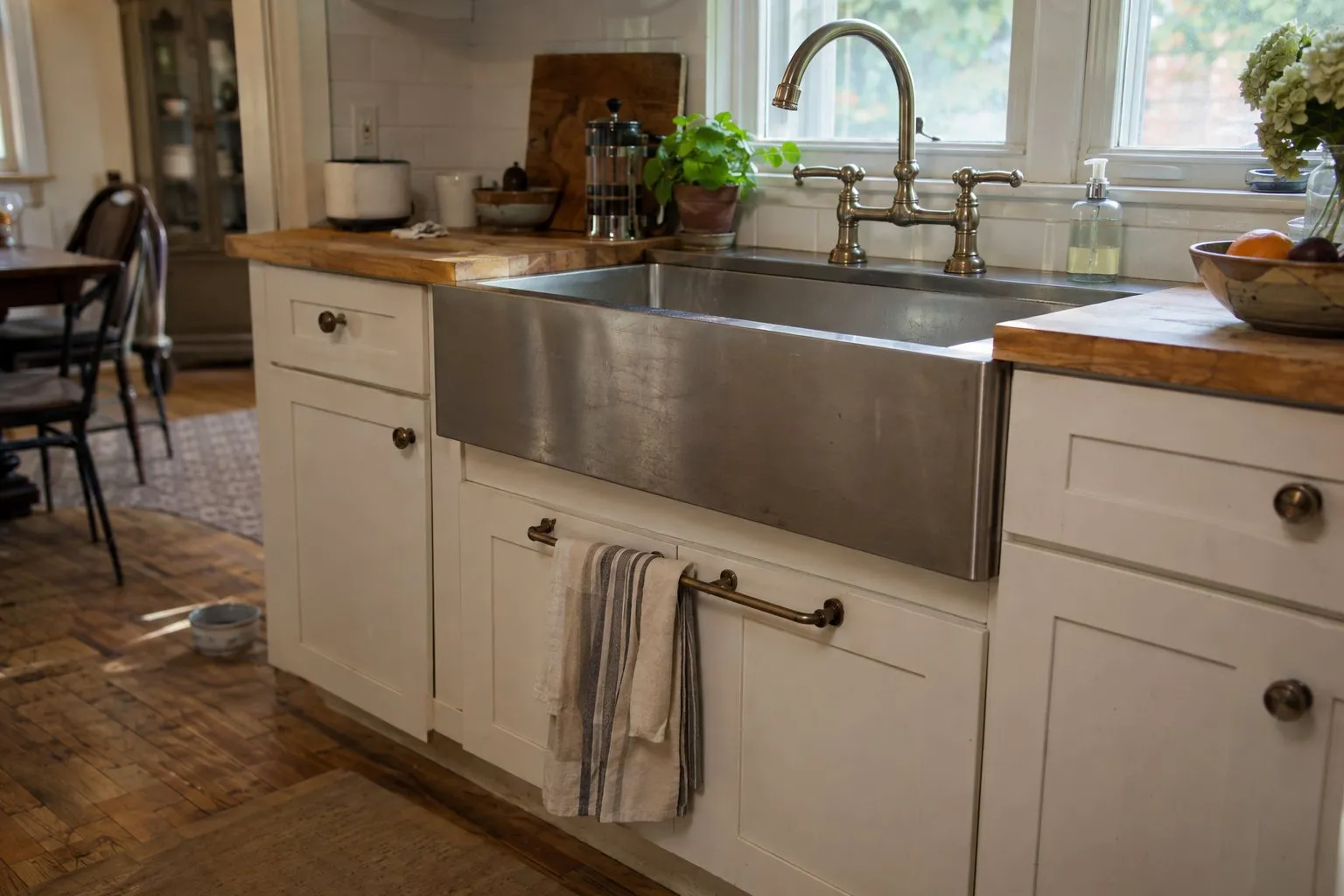
A farmhouse sink can go in a standard cabinet if the cabinet is reworked. The Sink Boutique lists a reworked front with new trim, doors cut down, a support structure, and possibly a removed counter and rerouted drains. A retrofit sink has a shorter apron and needs less of that. Signature Hardware says it is trimmed about 3 inches. Ask your installer first.
On this page
The sink is often the smaller part of this job. Before you order, walk through what changes around it.
What changes in your cabinet
The Sink Boutique lists the work like this:
- The width. The cabinet should typically be about 3 inches wider than the sink. Check the maker's own figure.
- The front. The front face gets reworked, and a new trim piece is made and added.
- The doors. Most farmhouse sinks are about 9 to 10 inches deep, so the doors get cut down, then repainted or replaced.
- The support. These sinks are heavy, so a support structure has to be built inside.
- The level. The sink must sit level, and shims can adjust it.
- The counter. The entire countertop may need to come off or be replaced.
- The drain. The drain lines may need rerouting.
If that list sounds like too much, it's a fair reason to stay with a regular undermount instead.
Three ways to go
| Route | What it asks of you | Good when |
|---|---|---|
| New cabinet base | Replacing the sink base | You're remodeling anyway |
| Standard apron sink in your cabinet | All of the rework above | The cabinet is wide enough and you want the full look |
| Retrofit sink with a short apron | Less rework, per The Sink Boutique | You're keeping the cabinets |
We don't list a retrofit model yet, because we couldn't confirm one with a spec sheet of its own. Search for the words retrofit or short apron, then check the cabinet size on the sheet.
Ask your installer these
- Can the face frame be cut without weakening the cabinet?
- Who builds the supports, and from what? KRAUS's manual names angle irons, 2×4s and 3/4-inch plywood as materials.
- Can the counter stay, or does it have to come off?
- Do the drain lines need to move?
- Who handles the doors afterward?
If it does go ahead
The steel route is the KRAUS KHF200-33*, and the farmhouse page compares it with white options. How heavy is a farmhouse sink matters for the supports, and our install overview lays out the order of the work.
Asked before buying
How much bigger than the sink should the cabinet be?
About 3 inches wider, according to The Sink Boutique, Signature Hardware and KRAUS's 2017 guide. Yale Appliance puts it as about 1.5 inches of clearance on each side. KRAUS's 2020 manual gives a smaller figure for its own sinks, so check the sheet of the exact sink you have in mind.
What is a retrofit farmhouse sink?
It's an apron sink with a shorter front, built to fit existing cabinets with less rework. Signature Hardware says a full apron is usually about 10 inches tall, and a retrofit one is trimmed about 3 inches from the bottom. Magnus calls these short apron models and says they can fit over the existing face frame.
Do I have to replace the countertop?
Possibly. The Sink Boutique says the entire countertop may need to be removed or replaced, since the sink comes through the front of it. Whether yours can be saved depends on the material and how it was installed, so ask a counter fabricator before you commit.
Can I do this myself?
KRAUS recommends a licensed professional for its farmhouse sinks, and The Sink Boutique says to consult your kitchen installer. The job combines cabinet carpentry, counter cutting and plumbing. If any one of those isn't something you'd take on, hire that part out.
Where this comes from
Read next
- What to buyFarmhouseStainless steel farmhouse sinks: the apron look without a glaze to chip, what they need from your cabinet, and how they compare to fireclay and cast iron.
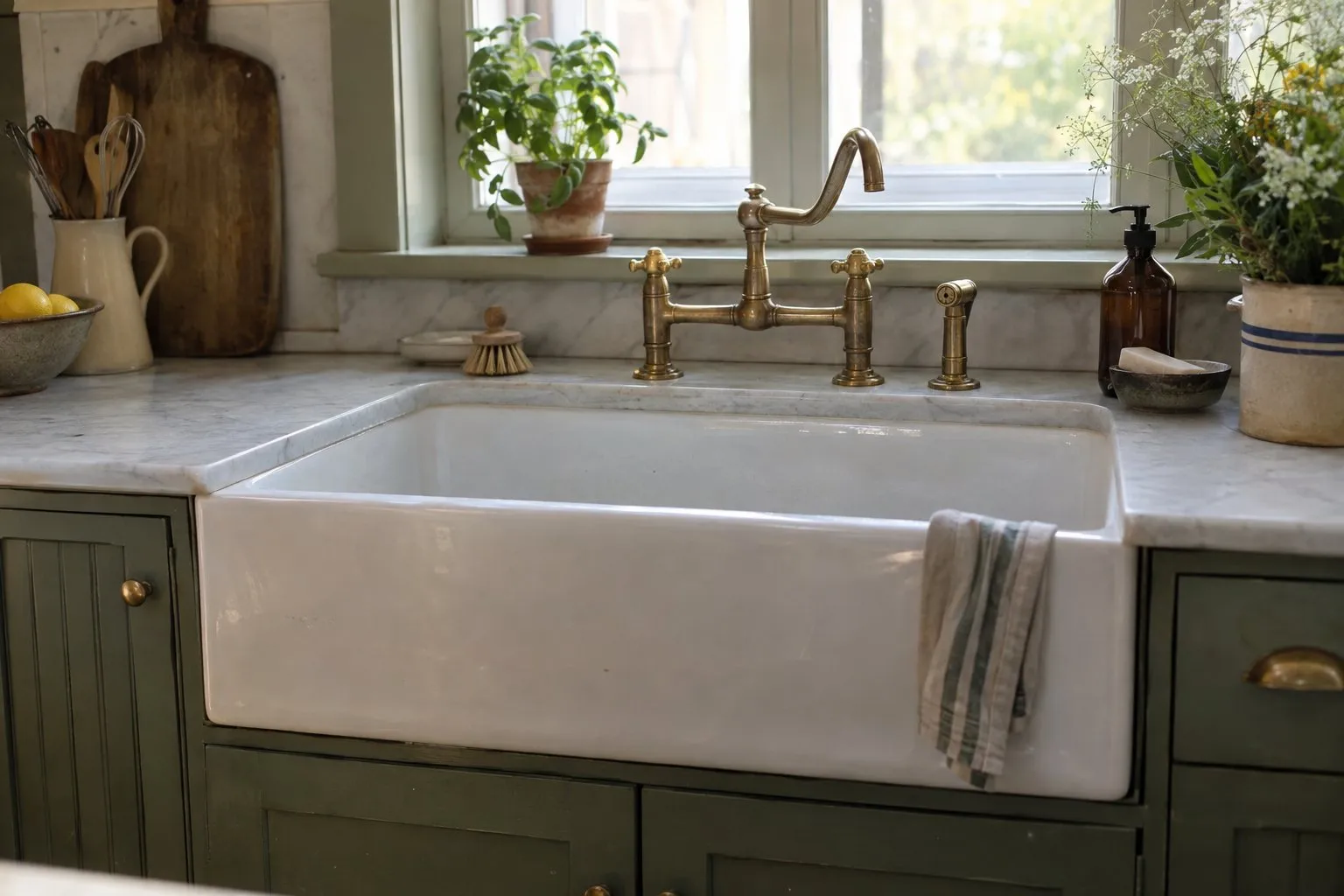 Good to knowSizes and cabinetsFarmhouse sink sizes with the cabinet makers ask for: 30, 33 and 36 inch sinks from KRAUS, Ruvati, BOCCHI and Kohler, and why you should plan for 3 inches extra.
- How toHow it's installedHow a farmhouse sink gets installed, following KRAUS's manual: supports, cabinet cut, reveal, counter cut and plumbing, and who should do which part.
- ComparisonApron or farmhouseApron vs farmhouse sink: the words mostly mean the same sink. What each one really describes, and what to check instead of the name before you buy one.
- What to buyFireclay farmhouseFireclay farmhouse sinks: why they're heavy, what they need from your cabinet, how to care for them, and which to choose for a 36-inch or a 33-inch base.
Who writes this
stainlesssteelkitchensink.com Editorial Team
Kitchen sinks & fit
We are the editorial team at stainlesssteelkitchensink.com. We read makers' spec sheets, install manuals and care guides and turn them into plain-English buying advice, with sources on every page. We do not run lab tests, and we say so openly.
- Spec sheets & standards read
- Sources on every page
- No lab tests – stated openly
- Publisher details in the imprint