How to
How to Clean a Stainless Steel Sink, and What Never to Use
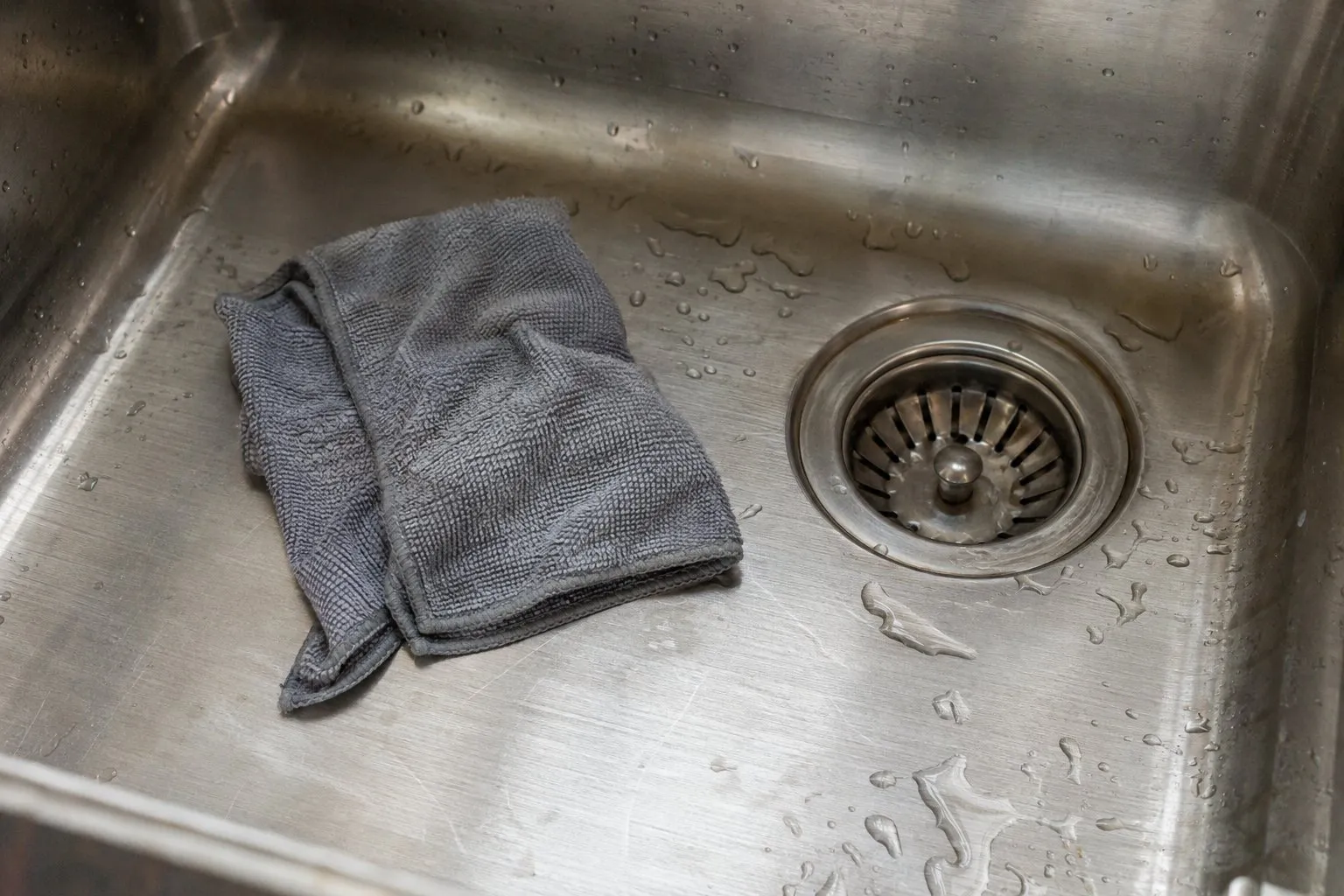
Wash it with mild soap and a soft cloth, rinse, and dry it. That takes a couple of minutes, and it prevents most of the marks people worry about. Skip steel wool, abrasive powders and bleach.
In short
Clean a stainless steel sink with mild, ammonia-free soap and a soft cloth, rinse with lukewarm water and dry with a microfiber cloth, as KRAUS advises. Wipe along the grain. For hard water, use a vinegar-soaked cloth, then rinse and dry. Never use steel wool, wire brushes, abrasive powders or bleach, and rinse right away if chlorine gets on it.
On this page
You need a soft cloth, mild soap and a dry towel. Five minutes is plenty.
The routine
Rinse it out
Clear the sink, take out the grid and strainer, and rinse away loose food.Wash with mild soap
KRAUS says mild, ammonia-free liquid soap. Use a soft cloth or the soft side of a sponge, and wipe along the grain, as Blanco advises.Rinse with lukewarm water
Rinse off all the soap, including under the rim and around the drain.Dry it
Dry with a microfiber cloth. Franke says that keeps water deposits from forming, and this is the step most people skip.
Find the grain
A brushed steel sink has fine lines running in one direction. Blanco says you can spot them by viewing the surface at an angle. Clean and polish along those lines, not in circles. Blanco warns that circular movements can permanently change the surface.
What never to use
| Don't use | Who warns against it |
|---|---|
| Steel wool, wire brushes | KRAUS, Blanco, Bob Vila |
| Abrasive powders, such as Comet or Ajax | KRAUS, Franke, Bob Vila |
| Rough side of a sponge | Franke, Blanco |
| Bleach | KRAUS, Franke, Blanco, Bob Vila |
| Ammonia | KRAUS, Bob Vila |
| Silver cleaners | Franke, Blanco |
Hard water and limescale
KRAUS suggests rubbing the surface with a vinegar-soaked dishcloth, then rinsing and drying. Blanco uses pure vinegar essence diluted 1:10 with water. Don't leave it sitting. Bob Vila lists vinegar, wine and tomato sauce among the things not to leave in the bowl.
Things that leave marks
Bob Vila warns against leaving damp cast iron or metal tools in the sink, since these can leave orange rust residue. Franke warns against leaving plastic pads on the surface for long, because dirt and moisture collect under them. Get those out of the bowl, and rust spots become far less likely.
Going further
Stuck-on marks? Bob Vila suggests a baking soda and water blend. For shine, KRAUS names Bar Keepers Friend with a non-scratch pad. For fine lines from daily use, see scratches. And a sink grid prevents many of them, so it's worth using one.
Still choosing a sink? The overview starts with what fits your cabinet, and the best sinks page lists our picks.
Asked before buying
What should you not use on a stainless steel sink?
KRAUS rules out cleaners with abrasive powders, bleach, ammonia, alcohol or chlorine, and steel wool, wire brushes or abrasive pads. Franke adds silver cleaners and acids. Blanco warns against hypochlorite bleach, and says circular scrubbing can change the surface for good.
Will vinegar ruin a stainless steel sink?
Not if you use it briefly and rinse it off. KRAUS suggests rubbing hard water buildup with a vinegar-soaked dishcloth, then rinsing and drying. Blanco dilutes vinegar essence 1:10 for limescale. Bob Vila warns against leaving acidic things such as vinegar sitting in the sink.
What is the best cleaner for a stainless steel sink?
For daily use, mild dish soap, which is what KRAUS and Franke recommend. For more shine, use a cleaner made for stainless steel. Franke sells one, and KRAUS names Bar Keepers Friend with a non-scratch pad for minor scratches. Follow the label and rinse well.
How often should I clean it?
KRAUS suggests a cleaning with soap and water weekly, and Franke says to wipe and dry the sink after use. Blanco adds polishing every 3 to 4 weeks, except on some finishes such as satin matt. Drying is the habit that does the most, because it stops water spots forming.
Where this comes from
Read next
- TroubleshootingRust spotsRust on a stainless steel sink usually starts with something else: damp cast iron, iron particles or chlorine. What makers say causes it, and how to clean it.
- TroubleshootingScratchesScratches in a stainless steel sink are normal, says Franke. What makers suggest for fine ones, what to avoid, how to follow the grain and how to prevent more.
 Good to knowSink gridsA stainless steel sink grid keeps pans off the bowl and protects the finish, KRAUS says. Which picks include one, how to choose one, and how to keep it clean.
- Question & answerCan You Use Bar Keepers Friend on a Stainless Steel Sink?Yes, KRAUS itself names Bar Keepers Friend for minor scratches on its stainless sinks. How to use it along the grain, what the maker says, and what to check first.
- Question & answerCan You Clean a Stainless Steel Sink with Baking Soda?Yes, Bob Vila recommends a baking soda and water blend for stainless steel sinks. How to use it gently, along the grain, and how it differs from abrasive powders.
- Question & answerCan You Use Bleach on a Stainless Steel Sink?Better not. KRAUS, Franke, Blanco and Bob Vila all warn against bleach on stainless steel sinks. What to do if it happens, and how fireclay differs.
Who writes this
stainlesssteelkitchensink.com Editorial Team
Kitchen sinks & fit
We are the editorial team at stainlesssteelkitchensink.com. We read makers' spec sheets, install manuals and care guides and turn them into plain-English buying advice, with sources on every page. We do not run lab tests, and we say so openly.
- Spec sheets & standards read
- Sources on every page
- No lab tests – stated openly
- Publisher details in the imprint