Troubleshooting
Scratches in a Stainless Steel Sink: What Works, What Doesn't
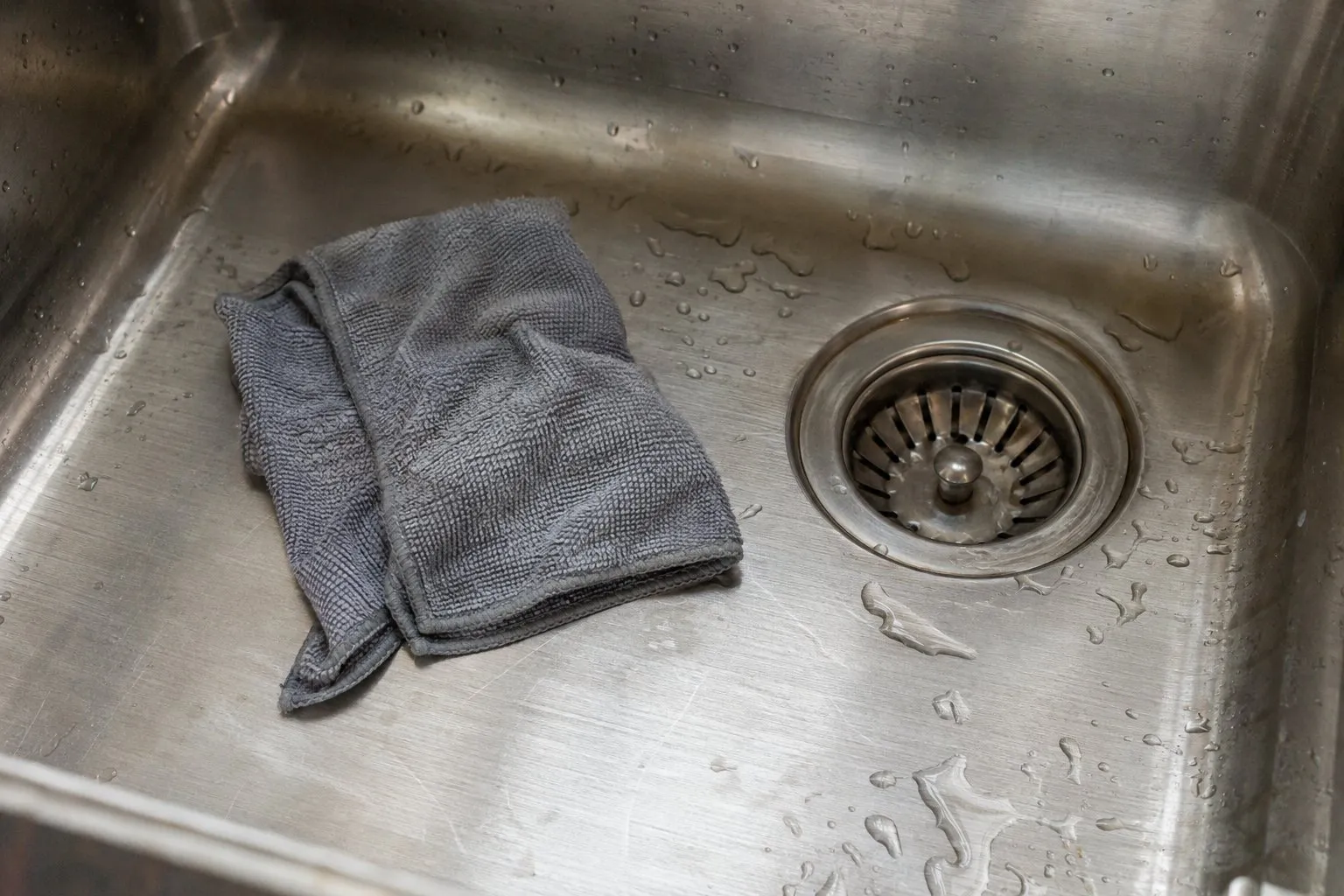
Some scratching is normal, Franke says, and fine scratches can be polished down. Deep ones won't vanish, so don't scrub at them with anything rough. Work with a non-scratch pad along the grain, and use a grid to prevent more.
In short
Fine scratches are normal on a stainless steel sink and can be polished. Franke uses its stainless cleaner, and KRAUS names a fine white Scotch-Brite or non-scratch pad with Bar Keepers Friend. Always work along the grain, never in circles. Blanco says scratches blend in over time with regular polishing, except on some finishes. Deep scratches stay.
On this page
Before you do anything, look at the finish. A brushed sink has its own fine lines, and the aim is to blend in with those and not to erase them.
Fine or deep?
Run a fingernail across the scratch. That's a common way to judge it, and it's our suggestion, not a maker's rule. If your nail glides over it, it's a fine line you can polish. If it catches, treat it as permanent.
For fine scratches
Clean and dry the sink
Wash with mild soap, rinse and dry, so that no grit gets rubbed in.Find the grain
Blanco says you can spot the brushing direction by looking at the surface from an angle.Work along the grain
Use Franke's cleaner on a soft cloth, or Bar Keepers Friend with a non-scratch pad, as KRAUS suggests. Never go in circles. Blanco warns that can permanently change the surface.Rinse and dry
Rinse thoroughly and dry with a microfiber cloth.
What not to do
- Don't use steel wool, wire brushes or a green scouring pad.
- Don't use powdered cleansers. Bob Vila names Comet and Ajax.
- Don't scrub across the grain, or in circles.
Prevent more
A sink grid is the first thing to get. KRAUS says to use it to protect the bowl's finish. Avoid dropping cutlery into the empty sink, and read what to use and what to skip. For orange marks rather than lines, see rust spots.
If you're buying new, thicker steel won't stop scratches but is less likely to dent, as 16 or 18 gauge explains. If you're wondering about the cleaner, see Bar Keepers Friend on a sink.
Asked before buying
Do stainless steel sinks scratch easily?
They do pick up fine lines in use. Franke says hard or sharp objects scratch the surface and that some scratching from dishwashing is normal. Ruvati says 16 gauge is less likely to dent or scratch than 18 gauge, though we'd expect any sink to pick up marks in daily use.
Can scratches be buffed out?
Fine ones can be reduced. Franke says its cleaner polishes fine scratches, and KRAUS suggests a non-scratch pad with Bar Keepers Friend. None of the makers we read promises to remove deep scratches, so treat those as permanent unless a professional tells you otherwise.
What causes scratches on a sink?
Blanco names prickly brushes, the scratchy side of sponges, pot scouring pads and steel wool. Franke adds hard or sharp objects. Metal pans and cutlery dropped in the bowl count too, which is the reason KRAUS tells you to use a bottom grid.
Where this comes from
Read next
- How toHow to clean itHow to clean a stainless steel sink: mild soap, a soft cloth and a dry wipe. Plus what KRAUS, Franke and Blanco warn against, and how to treat limescale.
- TroubleshootingRust spotsRust on a stainless steel sink usually starts with something else: damp cast iron, iron particles or chlorine. What makers say causes it, and how to clean it.
 Good to knowSink gridsA stainless steel sink grid keeps pans off the bowl and protects the finish, KRAUS says. Which picks include one, how to choose one, and how to keep it clean.
- Question & answerCan You Use Bar Keepers Friend on a Stainless Steel Sink?Yes, KRAUS itself names Bar Keepers Friend for minor scratches on its stainless sinks. How to use it along the grain, what the maker says, and what to check first.
- Comparison16 or 18 gauge16 vs 18 gauge stainless steel sinks: a lower number means thicker steel. What that changes for dents and noise, and when 18 gauge is plenty for your kitchen.
Who writes this
stainlesssteelkitchensink.com Editorial Team
Kitchen sinks & fit
We are the editorial team at stainlesssteelkitchensink.com. We read makers' spec sheets, install manuals and care guides and turn them into plain-English buying advice, with sources on every page. We do not run lab tests, and we say so openly.
- Spec sheets & standards read
- Sources on every page
- No lab tests – stated openly
- Publisher details in the imprint