Comparison
Apron vs Farmhouse Sink: Mostly Two Names for One Thing
In shops you can treat them as one thing. Apron describes the exposed front panel, and farmhouse describes the style and where it comes from. Signature Hardware simply calls farmhouse sinks apron-front sinks. So check the specs, not the name.
Disclosure: This page contains affiliate links (marked with *). If you buy through them, we earn a small commission at no extra cost to you. As an Amazon Associate I earn from qualifying purchases. Learn more
In short
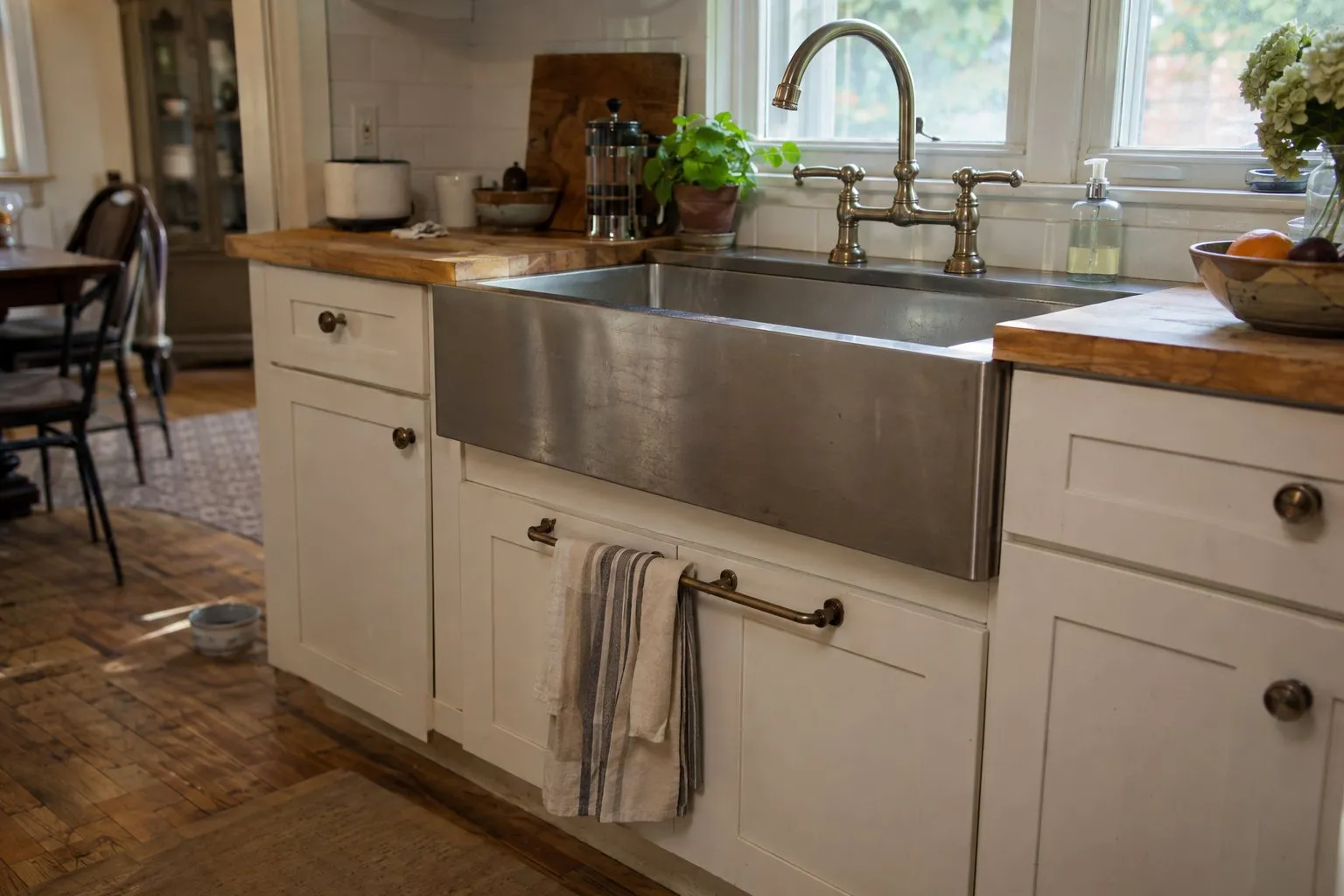
There's little real difference. Magnus says the terms are often used interchangeably: apron means a sink with an exposed front panel, and farmhouse describes the lineage, a wide, deep, rural-looking vessel. Signature Hardware calls farmhouse sinks apron-front sinks. What matters is the apron height, the material and what the sink needs from your cabinet.
On this page
You won't be able to sort sinks by these two words. Sellers use them for the same products.
What each word describes
| Apron | Farmhouse | |
|---|---|---|
| The word points to | The exposed front panel | The style and its history |
| Per Magnus | Replaces the cabinet panel in front of the basin | Any wide, deep vessel with a rural, utilitarian look |
| Cabinet | May need custom cabinetry | May need custom cabinetry |
| Depth | Deep basins | Similar depth |
What to check instead
The apron height. A full apron is usually about 10 inches, Signature Hardware says, and a retrofit one about 3 inches less. That decides how much of your existing cabinet changes. Short apron is the word to search for.
The material. Steel, fireclay, cast iron or something else. It changes the care and the weight far more than the name does. Fireclay vs stainless steel compares the two you're most likely to choose between.
The mounting. Makers vary here too. Kohler calls the Whitehaven an undermount apron sink with a Self-Trimming front. Other designs sit differently, so read the install notes.
The faucet. Most have no holes, so it goes on the counter or wall.
The bowls. Signature Hardware says single bowls are more common, though doubles exist.
Next steps
If you already want one, our farmhouse page has the picks: the KRAUS KHF200-33* in steel and the Ruvati RVL2300WH* in fireclay. To see what the work involves, read the install overview.
Asked before buying
Is an apron front sink the same as a farmhouse sink?
For shopping purposes, yes. Magnus says the terms are often used interchangeably and separates them only by design intent and configuration. Signature Hardware defines farmhouse sinks as apron-front sinks. You'll find both words on the same products.
Do both need a special cabinet?
Generally, yes. Magnus lists possible custom cabinetry for both, and Signature Hardware says a farmhouse sink needs a custom cabinet or custom support. The exception is a retrofit sink with a short apron, which is made to fit existing cabinets with less work.
Is a farmhouse sink always white?
No. Signature Hardware lists fireclay, porcelain, stainless steel, copper, natural stone and cast iron. The white ones are the best known, but the shape isn't tied to the color. Our steel pick is the KRAUS KHF200-33.
Where this comes from
Read next
- What to buyFarmhouseStainless steel farmhouse sinks: the apron look without a glaze to chip, what they need from your cabinet, and how they compare to fireclay and cast iron.
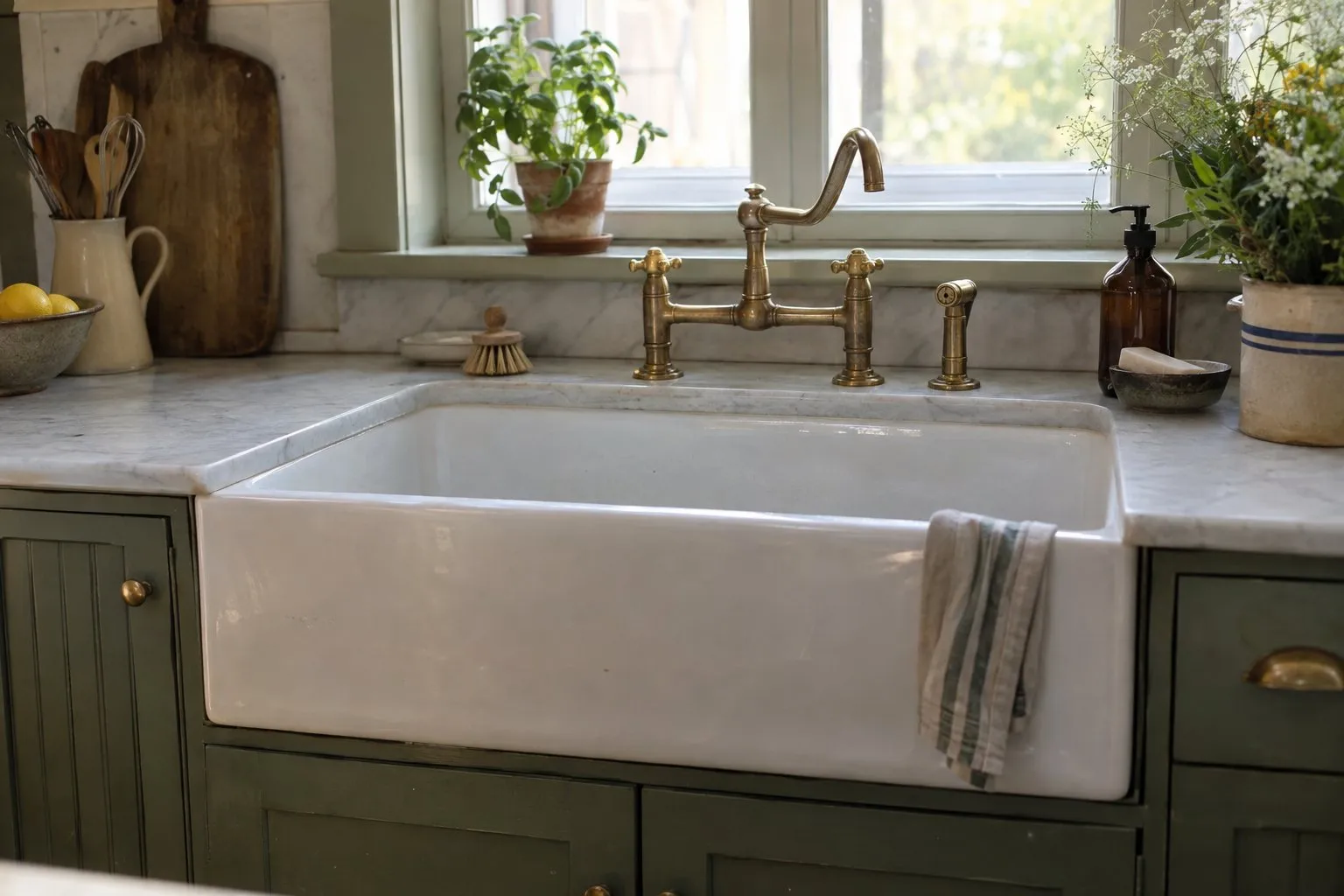 ComparisonFireclay or steelFireclay vs stainless steel sinks: compare weight, care, what can go wrong and the look, with facts from KRAUS, Ruvati and Signature Hardware.
- Good to knowIn an existing cabinetA farmhouse sink can go in a standard cabinet, but the front gets reworked and the doors cut down. What's involved, when a retrofit sink is the better route.
- How toHow it's installedHow a farmhouse sink gets installed, following KRAUS's manual: supports, cabinet cut, reveal, counter cut and plumbing, and who should do which part.
Who writes this
stainlesssteelkitchensink.com Editorial Team
Kitchen sinks & fit
We are the editorial team at stainlesssteelkitchensink.com. We read makers' spec sheets, install manuals and care guides and turn them into plain-English buying advice, with sources on every page. We do not run lab tests, and we say so openly.
- Spec sheets & standards read
- Sources on every page
- No lab tests – stated openly
- Publisher details in the imprint