Comparison
Fireclay vs Stainless Steel: Which Farmhouse Sink Suits You?
Choose fireclay for the thick white look, if your cabinet can carry it. Choose stainless steel if you want no glaze to chip and simpler everyday use. Both shapes need the same cabinet planning, and they have very different care rules.
Disclosure: This page contains affiliate links (marked with *). If you buy through them, we earn a small commission at no extra cost to you. As an Amazon Associate I earn from qualifying purchases. Learn more
In short
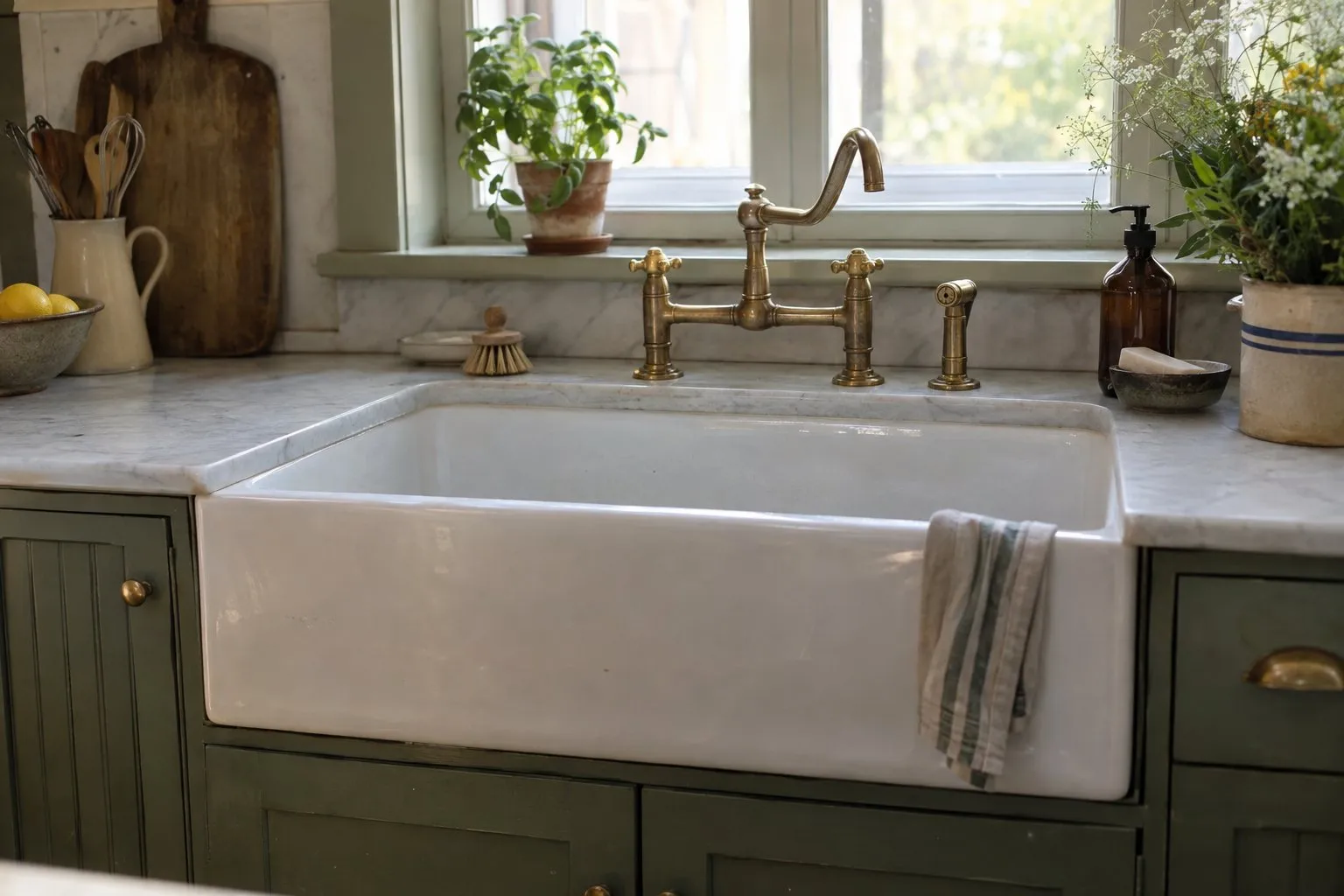
Fireclay is thick clay fired at high heat, and the look is the reason to buy it. Stainless steel is thinner sheet metal: it can't chip like a glaze, but it scratches. KRAUS gives different care for each. Bleach, for example, is allowed in a specific way on its fireclay and ruled out on its steel. Take steel for ease, fireclay for the look.
On this page
Same shape, different material. Here's what that changes in practice.
Side by side
| Stainless steel | Fireclay | |
|---|---|---|
| What it is | Sheet steel | Clay fired above 2,000 degrees F, per Signature Hardware |
| Look | More modern, straight apron lines, per Signature Hardware | Classic, usually a flat front |
| Thickness | 16 gauge, per the KRAUS listing | 1 inch, per Ruvati, on the RVL2300WH |
| Size variation | Not mentioned on our sheets | BOCCHI's listing warns dimensions may vary |
| Bleach | Ruled out, per KRAUS | Diluted soak allowed, per KRAUS |
| Hot pans | No limit in the care guide we read | Use a trivet or mat, per KRAUS |
| Our pick | KRAUS KHF200-33 | Ruvati RVL2300WH |
Where steel wins
There's no glaze to chip and nothing to stain from coffee or tea left sitting, which KRAUS warns about on fireclay. KRAUS's care guide also sets no rule against hot pans on steel. If your kitchen is busy, that's a real point in its favor.
Where fireclay wins
The look, mostly. It's thick and white, and the reason most people want this shape. Steel suits a modern kitchen well, but it doesn't read as a classic farmhouse sink. It also doesn't show the fine scratches steel can pick up.
Where neither wins
Both need the same cabinet planning: supports inside, a reworked front, a counter cut around it, and a faucet behind the bowl. Choosing steel won't get you out of that job, though it may be easier to lift. How heavy is a farmhouse sink gives the figures we could find.
Take steel if, take fireclay if
Take steel if you'd rather not worry about chips or stains, or your kitchen is modern. Our pick is the KRAUS KHF200-33*. Care follows our stainless cleaning guide.
Take fireclay if the classic look is why you started this, and your cabinet can carry it. Our pick is the Ruvati RVL2300WH*. See the fireclay page.
Still deciding on the words? Apron vs farmhouse settles that quickly.
Asked before buying
Does fireclay chip?
We read no maker's figures on this, so we won't rate it. It's a glazed surface, and KRAUS warns against steel wool and strong pads on it because they can scratch and dull the finish. Treat it with care around heavy pans. Steel has no glaze to lose, though it does scratch.
Is fireclay heavier than stainless steel?
Fireclay is the heavy one. The BOCCHI 30-inch listing gives 76.81 pounds, and Ruvati's fireclay is 1 inch thick. The Sink Boutique says farmhouse sinks are heavy in general and need a support structure. We didn't find a stated weight for the steel KRAUS.
Which one is easier to clean?
Both are simple day to day, but the rules differ. Steel wants mild soap, a dry wipe, and no bleach. Fireclay wants a rinse and a wipe, and it tolerates more cleaners, including a diluted bleach soak that KRAUS describes. Don't use steel wool on either.
Where this comes from
Read next
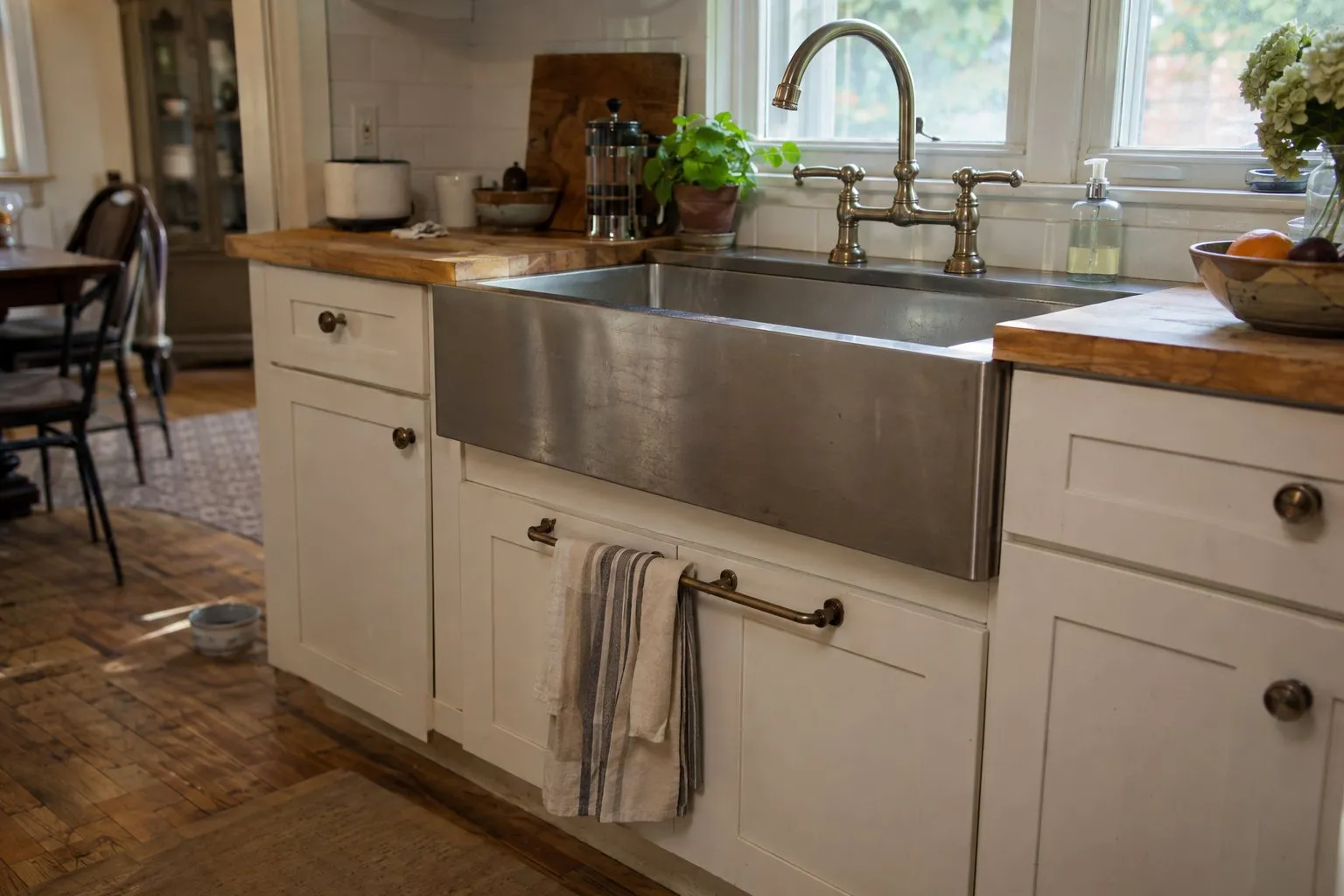 What to buyFarmhouseStainless steel farmhouse sinks: the apron look without a glaze to chip, what they need from your cabinet, and how they compare to fireclay and cast iron.
- What to buyFireclay farmhouseFireclay farmhouse sinks: why they're heavy, what they need from your cabinet, how to care for them, and which to choose for a 36-inch or a 33-inch base.
- ComparisonApron or farmhouseApron vs farmhouse sink: the words mostly mean the same sink. What each one really describes, and what to check instead of the name before you buy one.
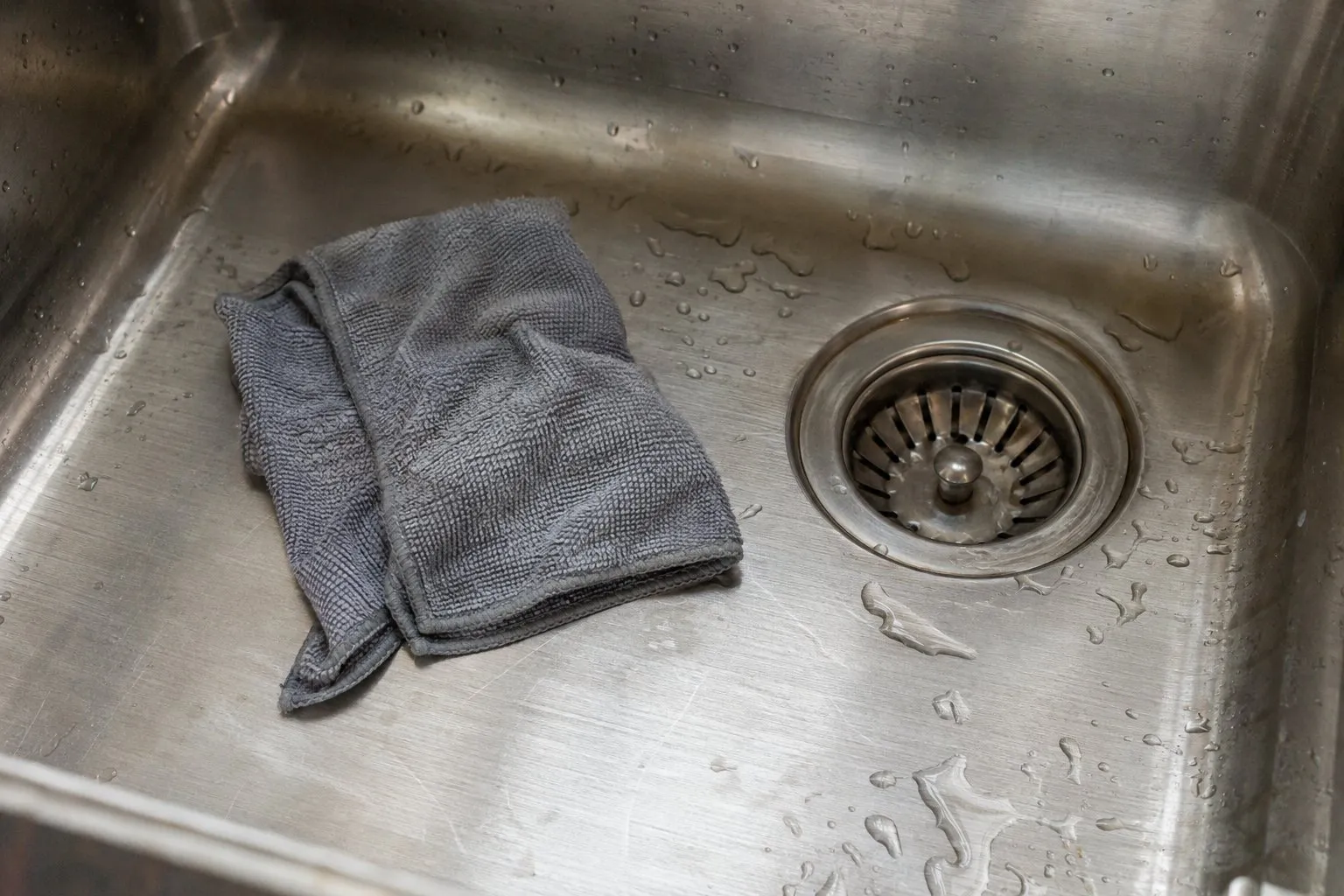 How toHow to clean itHow to clean a stainless steel sink: mild soap, a soft cloth and a dry wipe. Plus what KRAUS, Franke and Blanco warn against, and how to treat limescale.
- Question & answerHow Heavy Is a Farmhouse Sink?How heavy is a farmhouse sink? One fireclay listing gives 76.81 pounds. Why it varies by material, and what weight means for the supports in your cabinet.
Who writes this
stainlesssteelkitchensink.com Editorial Team
Kitchen sinks & fit
We are the editorial team at stainlesssteelkitchensink.com. We read makers' spec sheets, install manuals and care guides and turn them into plain-English buying advice, with sources on every page. We do not run lab tests, and we say so openly.
- Spec sheets & standards read
- Sources on every page
- No lab tests – stated openly
- Publisher details in the imprint